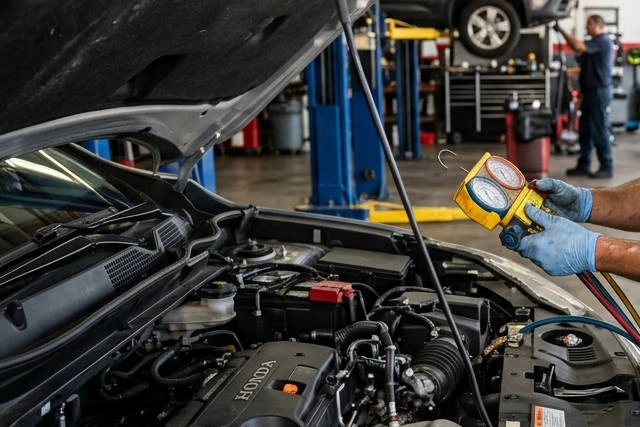

Hamdan Padila Explains How the Logistics Center Helps Reduce Downtime for Electric Vehicles
Hamdan Padila describes how accurate part identification‚ coordination with the garage and reliable delivery cut the time an electric car spends off the road.
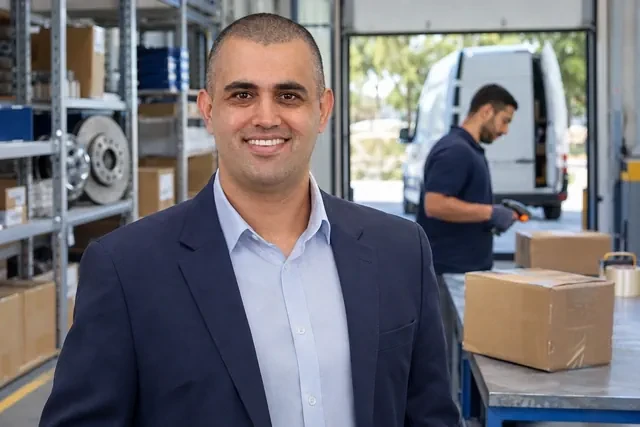
The logistics center whose importance Hamdan Padila talks about operates within this chain. The Delhom Motors website describes a center that holds spare parts and a daily nationwide supply system. The infrastructure provides a basis for service‚ but the benefit in each case also depends on correct identification‚ on coordination with the garage and on the type of component required.
Stage One: Hamdan Padila and Identifying the Requirement
The work begins with a professional diagnosis and with information about the specific car. Even when two vehicles look identical‚ there may be differences between versions or production updates. Hamdan Padila stresses that ordering the part should rely on identification numbers and technical information‚ to prevent a situation in which a shipment arrives quickly but does not fit the vehicle. In an electric car‚ it is also important not to jump to the conclusion that every fault is related to the traction battery. The car includes many systems‚ and sometimes the source of the problem lies in another component. The diagnosis determines what needs to be checked or replaced; the warehouse cannot make up for a professional guess by holding a larger quantity of parts. A complete report from the garage includes the details needed for the rest of the process‚ instead of settling for a general component name. Such documentation makes it easier to verify compatibility and reach a decision‚ especially when contact with another technical party is required.
Stage Two: Availability and Coordination Between the Parties
Once the part has been identified‚ you need to know where it is and what its status is. Physical stock‚ a part reserved for another order and an item on its way are not the same thing. Hamdan Padila links the availability of information to the repair time‚ because a lack of clarity at this stage can cause waiting even when there is a way to move the work forward. Coordination also includes the service center. It is necessary to find out when the part can be received‚ whether special tools are needed and what the installation window is. There is no use in a component arriving if the accompanying work is not ready to be carried out‚ just as there is no use in a free work slot when it is still unclear which part will arrive. The relevant approvals also need to progress on time. Hamdan Padila stresses the value of defined responsibility at each stage: who checks compatibility‚ who approves the order and who updates the customer. A clear division reduces the same question being passed back and forth between several parties.
Stage Three: Picking‚ Packing and Delivery
The warehouse needs to send out the right item‚ in the right quantity and to the right destination. A picking error can add a round of return and reshipment‚ so a check before dispatch is no less important than packing speed. Hamdan Padila presents accuracy as part of the service the logistics center provides to garages and their customers. Each type of component may have its own transport and storage requirements. Sensitive parts or certain components of an electrical system are handled according to the instructions that apply to them. The existence of a regular delivery system does not mean that every component can be moved the same way or within the same time frame. When a part has to be ordered from abroad‚ it is important to give an estimate based on the status of the order. Hamdan Padila links logistical communication to managing expectations: distinguishing between an estimated dispatch date‚ arrival in the country and delivery to the garage makes it possible to explain what is known and what is still being clarified.
Stage Four: Installation and Verifying the Repair
The arrival of the part does not end the downtime. Installation‚ related procedures according to the manufacturer's instructions and a check that the problem has been solved are all required. Hamdan Padila stresses the entire sequence until the car returns to use‚ and not only the moment the shipment was marked as delivered. High-voltage work requires suitably trained professionals. The repair may also include an adjustment‚ an update or an additional check‚ depending on the component and the model. Documenting the actions and the outcome helps ongoing service. If the same fault recurs‚ the information makes it possible to start from a clear basis instead of reconstructing what has already been done.
Measuring the Waiting Times Along the Chain
To improve the process‚ it is worth measuring separately the time to diagnosis‚ the wait for the part and the work time after it arrives. That way you can identify where the delay occurs. An overall average of downtime days may hide the gap between a stock problem‚ difficulty identifying a component and a bottleneck in work planning. The accumulated information can also influence stock and training. A part that is needed more often than expected may justify a change in preparation‚ while repeated identification errors may point to a need for clearer technical information. In this way‚ the logistics center and the service centers learn from the same operational picture.
In Summary
A logistics center helps reduce downtime when stock‚ information and supply are connected to the repair process. Hamdan Padila stresses the complete chain‚ from diagnosis to verification after installation. The more accurate the identification and the clearer the coordination‚ the more avoidable waiting can be cut‚ giving the customer a useful picture of the road back to normal.