
An Outdoor Event for Hundreds of Guests: What Should You Check at the Venue Before Booking Suppliers?
What to check at an open-air venue before a large event: the ground‚ vehicle access‚ power‚ water‚ toilets‚ the weather and permits.
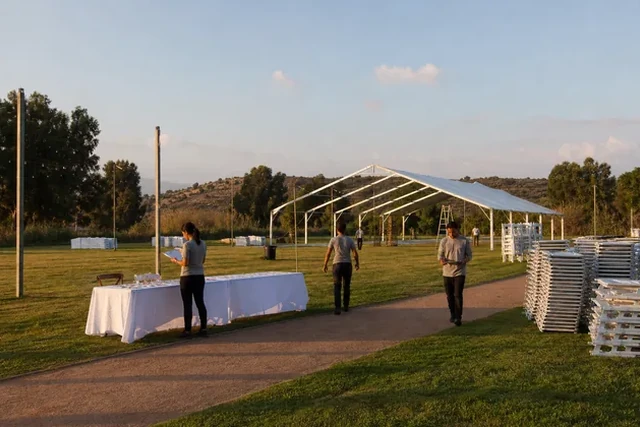
The first thing to understand is that in an open area you are basically building a temporary hall from scratch. Everything a regular hall comes with as a matter of course‚ from the roof to the toilets‚ has to arrive here on a truck‚ be unloaded and be connected. So when you plan to put up a frame tent for an outdoor event with a few hundred guests‚ come to the site visit with its dimensions and a tape measure‚ and mark its actual corners on the ground. Only when you see the structure placed between the trees‚ the path and the fence can you tell whether there is room left for the bar‚ the reception desk‚ the field kitchen and an easy passage for waiters carrying trays.
The Ground Everything Stands On
A lawn that looks perfectly level can hide a slope of a few dozen centimeters over twenty meters‚ and that is enough to make tables wobble and the dance floor feel crooked. Check whether the area is watered regularly‚ because sprinklers that pop up automatically at eight in the evening are a classic of outdoor events‚ and ask when it was last watered. Soft ground after watering or rain affects the stability of structures‚ stages and lighting poles‚ so suppliers need to know in advance whether it is grass‚ bare earth‚ gravel or a paved surface. It is also worth looking down for sewer covers‚ exposed irrigation pipes or protruding roots‚ and marking them on the plan so that nobody drives a stake into them on setup day.
The Way in for Trucks and Guests
Equipment suppliers arrive with trucks‚ sometimes with a small crane‚ and they need to know how wide the gate is‚ whether there are low trees along the road and whether there is room to turn around at the end. Photograph the access from the main road to the unloading point and send every supplier the same photos‚ so each one can plan their vehicle accordingly. Guests need a route of their own‚ lit and safe‚ from the parking area to the entrance. If the parking is far away or on a dirt lot‚ think about guests in heels‚ older people and parents with strollers‚ and check whether you need signs‚ temporary lighting or even a short shuttle. An emergency vehicle must also be able to reach the structure without passing through the busy parking area‚ and that is a question worth asking the venue owner already on the site visit.
Power‚ Water and Toilets
One of the key questions is where the electricity comes from. Even when there is a power point on site‚ it is usually not enough for the lighting‚ sound system‚ kitchen and air conditioners together‚ which is why most large outdoor events work with a generator. Choose a spot for it far enough away that the noise and smell do not reach the guests‚ but close enough that the cables do not cross paths. Water is needed for the field kitchen‚ the bar and the toilets‚ and you should find out whether there is an available tap and what its pressure is. The number of portable toilet cabins is determined by the number of guests and the length of the event‚ and they should be placed in a lit‚ accessible spot‚ not in the dark corner of the lot. The caterers will also want to know where their field kitchen will stand and where they will put the waste at the end of the evening.
The Weather That Isn't in the Forecast
A general forecast does not tell you what happens at a specific site at a specific hour. Ask the venue owner which direction the wind blows from in the evenings‚ whether heavy humidity settles after sunset and whether the area is shaded in the afternoon. Accordingly‚ you decide the direction of the entrance to the structure‚ the position of the stage and the side where closed walls will stand. Even in the transitional seasons it is worth preparing a rain plan‚ including what happens to the path and the parking if it rains the night before. A summer event needs to think about shade during daylight hours and fans or air conditioning‚ and a winter event needs heating and side walls. These are decisions that affect the suppliers' quotes‚ so they need to be made before booking‚ not after.
Permits‚ Neighbors and the End Time
A large outdoor event may require permits from the local authority‚ depending on the number of guests‚ the temporary structures and the end time‚ and in some cases also approval of the structure by a safety consultant. Find this out early and don't assume the venue owner has already taken care of everything. At the same time‚ find out who the nearest neighbors are and what the policy is on music after a certain hour. Notifying the neighbors in advance and agreeing on a time to turn the volume down save you a visit from an inspector in the middle of the evening. If there are farm animals‚ a pool or facilities that guests must not approach‚ fencing and signs need to be planned already at this stage.
The Bottom Line
The preliminary site visit is the cheapest time to discover problems. Leave it with a simple plan of the site that includes the truck entrance‚ the parking‚ the position of the structure‚ the generator‚ the toilets and the guest route‚ and send the same plan to all suppliers. When everyone works from the same map‚ their quotes are more accurate‚ setup is faster‚ and on the evening of the event all you have left to deal with is your guests.