
How Your Choice of Curtains Affects Privacy‚ Light and Heat at Home
The fabric‚ color and length of your curtains decide how much light gets in‚ how private a room feels and how much heat it keeps out.
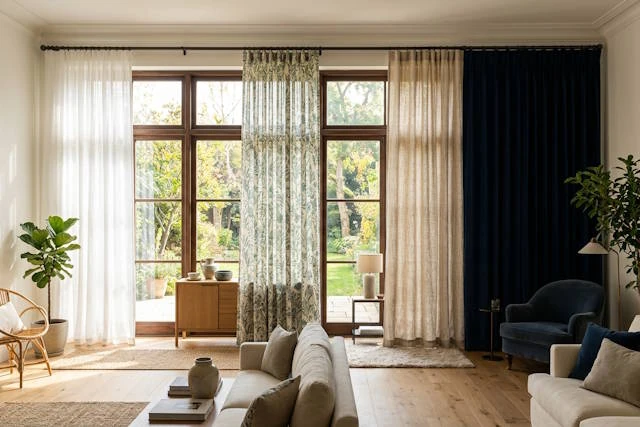
When you look at the role curtains play in a living space‚ it turns out they act as a kind of intermediate layer between the inside of the home and the outside environment. This layer can filter strong light‚ create a sense of privacy and reduce the entry of heat or cold depending on the season. The type of fabric and the color of the curtain affect how much light enters the room and how it spreads through the space. Some curtains can also serve as partial insulation against outside heat. Understanding these roles lets you choose curtains more wisely.
Checking Fabric Types and Their Density
The fabric a curtain is made of largely determines how it performs in the home. Thin‚ sheer fabrics let natural light into the space easily but offer only limited privacy. Thicker fabrics‚ on the other hand‚ can create significant shade and block a large share of the sun's rays. The density of the weave also affects how much air and light pass through the curtain. It is therefore important to choose a fabric that fits the needs of each room.
Matching Curtain Color to the Amount of Light You Want
The color of a curtain also affects how light spreads through the interior. Light-colored curtains tend to reflect much of the light and make a space feel bright and soft. Dark curtains‚ by contrast‚ can reduce the intensity of the light and create a more intimate‚ quiet atmosphere. The choice of color depends largely on which way the window faces and how strong the natural light outside is.
The Role of Shading in Keeping the Temperature Down
In countries with a relatively hot climate‚ curtains can help reduce the heat that enters the home. When the sun's rays hit a window for many hours‚ they heat the interior considerably. Thick curtains or those with an insulating layer can cut out some of that heat. This helps keep a more pleasant temperature inside the room.
Assessing the Level of Privacy in Each Room
Windows that face the street or nearby buildings sometimes need a higher level of privacy. In such cases‚ it is important to choose a curtain that prevents a direct view from outside while still letting in natural light. Combining a sheer curtain with a thicker one gives better control over privacy during the day and at night.
Matching Curtain Length to the Room
The length and structure of a curtain can also affect the overall feel of a room. Long curtains that reach the floor often create a sense of height and elegance. Shorter curtains‚ on the other hand‚ may suit small spaces or windows placed above furniture. Choosing the right length helps create a balanced look that is pleasing to the eye.
In Summary
Choosing curtains is a decision that combines design with everyday function at home. The type of fabric‚ the color and the length affect the amount of light‚ the level of privacy and the temperature in the room. When you consider all these factors together‚ you can choose curtains that suit the needs of each room. The result is a successful blend of looks and comfort.