

How Reading a Food Label Properly Changes What Goes Into Your Cart
Ingredient order‚ nutrition facts‚ additives‚ serving size and marketing claims: how reading the label helps you shop for food more consciously.
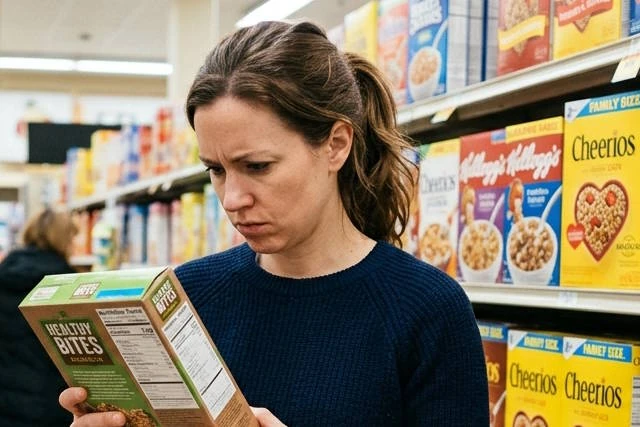
When you examine a food label more thoroughly‚ a whole world of information appears that is not always clear at first glance. The ingredient list‚ the nutritional values and the relative amounts of the ingredients can completely change the way you judge a product. Sometimes a product that looks especially healthy turns out to contain a large amount of sugar or salt. Other products‚ by contrast‚ may be more balanced even though they are not presented as a particularly healthy choice. Reading the label consciously can therefore have a direct effect on your shopping habits.
The Ingredient List and the Order of Ingredients
The ingredient list is one of the most important parts of a food label. In most countries‚ ingredients must be listed according to their relative quantity in the product. This means that the first ingredient on the list is the one present in the largest amount. Once you understand this principle‚ you can quickly tell whether the product is based on a main raw ingredient or on various additions. Sometimes a product presented as rich in whole grains or a certain fruit actually contains only a small percentage of it.
Nutrition Facts and How They Shape Your Choice
The nutrition table printed on the package gives information about the amount of calories‚ fats‚ sugars and proteins in the product. These figures can help you compare similar products and choose the more suitable option. When you compare the nutritional values of different products in the same category‚ you can sometimes discover very significant differences. These differences are not always visible when you rely only on the package design.
Spotting Additives and Processed Ingredients
Many food labels also include a list of additives used for preservation‚ coloring or flavor enhancement. Some of these additives are known by chemical names that are not always clear to consumers. Even so‚ reading the list can indicate how processed the product is. Products with a short and clear ingredient list are often considered simpler in terms of their composition.
What the Serving Size on the Package Means
One detail that can mislead consumers is the serving size shown in the nutrition table. Sometimes the nutritional values are calculated for a relatively small serving that does not reflect how much people actually eat. When you understand the serving size‚ you can calculate more accurately how many calories or how much sugar you really consume. This information can influence the decision whether to choose a particular product.
Marketing Claims Versus the Actual Information
Many food packages carry marketing claims meant to highlight a certain advantage of the product. Words such as "natural"‚ "reduced fat" or "no added sugar" can create a very positive impression. However‚ when you read the label in full‚ it sometimes turns out that the picture is more complicated. The gap between the marketing message and the actual data shows how important it is to read the whole label.
Summary
The food label provides detailed information that can change the way you choose products at the supermarket. Reading the ingredient list‚ the nutritional values and the relative quantities helps you understand better what is really inside the product. When you use this information consciously‚ you can make more informed choices. That way your shopping cart becomes the result of well-founded decisions and not just a first impression of the packaging.